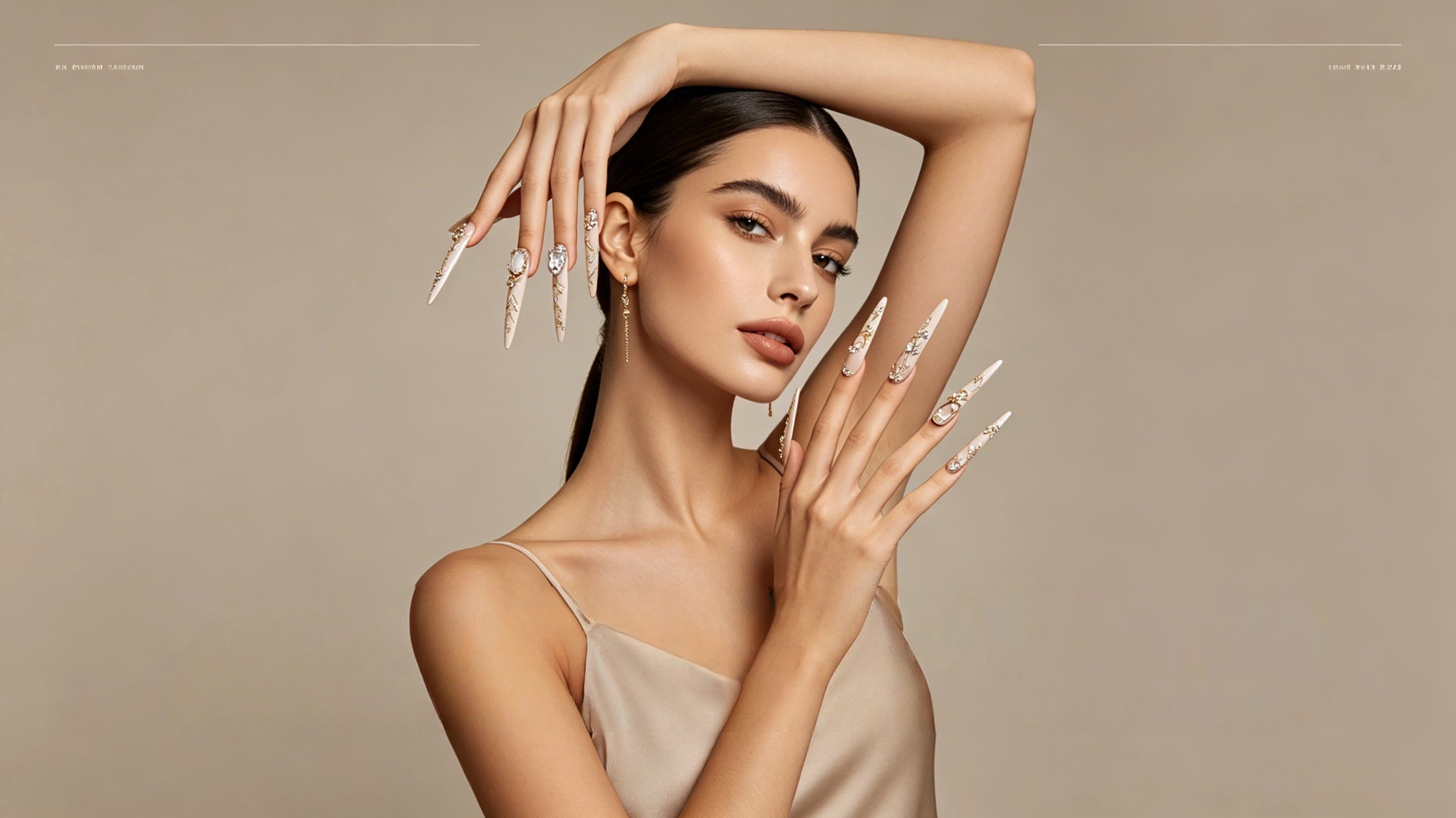

Wearable nail products, as a leading-edge sub-category in the beauty industry, have evolved from a niche nail art substitute into an independent fast-fashion essential
consumer product. For many consecutive years, they have maintained a growth rate far exceeding the average of the beauty industry, with long-term, stable, and sustainable

growth supported by a solid foundation. According to authoritative industry statistics, the domestic wearable nail industry has shown a step-by-step expansion trend: the overall
market size was 9.24 billion yuan in 2023, climbing to 10.78 billion yuan in 2024, and exceeding 12.86 billion yuan in 2025. The compound annual growth rate has remained stable
at around 16.5% for three consecutive years, far exceeding the 4.5% growth rate of total retail sales of consumer goods and the 7.2% growth rate of the overall beauty industry during
the same period, making it a typical example of explosive growth in the market.
Based on the Yiwu Index and comprehensive forecasts from domestic industry associations, the overall market size of wearable nails in China is projected to reach 23 billion yuan in 2026.
The industry's compound annual growth rate is expected to remain at 15% from 2026 to 2030, with the total domestic market exceeding 40 billion yuan by 2030, indicating substantial growth
potential. Among the sub-sectors, handmade wearable nails are showing particularly strong growth. With Donghai County in Jiangsu Province as its core industrial belt, the local annual output
of handmade wearable nails accounts for over 70% of the national total, with annual production and sales exceeding 13.5 billion yuan and an annual growth rate as high as 88%. This single
county-level industrial cluster has boosted the income of over 50,000 people in flexible employment, demonstrating the enormous profit potential of the handmade custom wearable nail sub-sector.
Changes in consumer statistics also directly reflect the industry's rising status. The National Bureau of Statistics has listed wearable nails as a separate statistical category in the retail sector of consumer
goods, marking that this category has completely shed its marginal accessory positioning and become a standardized beauty product category with independent consumption volume and a stable user base.
Capital, factories, and entrepreneurs continue to pour in, and the overall expansion trend of the industry will not subside in the short term.