

In today’s fast-paced consumer market, trust is the currency that drives purchasing decisions. Across industries—from coffee shops to fashion accessories—nationwide large chain brands consistently outperform smaller, standalone retailers in winning customer confidence. This phenomenon is not accidental; it stems from several structural advantages that scale provides.
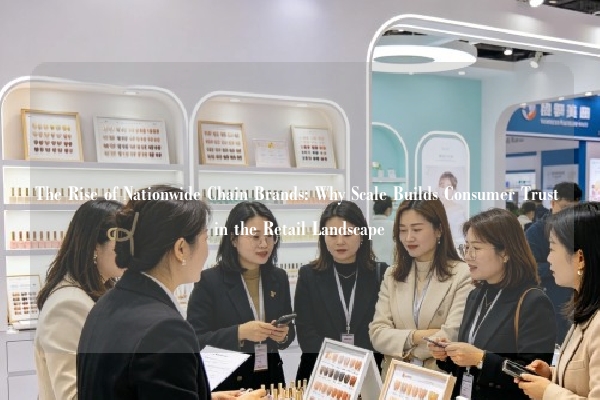
First, consistency is king. When a consumer walks into any branch of a national chain, they know exactly what to expect: the same product quality, the same pricing structure, and the same level of service. This predictability reduces perceived risk. For example, in the booming wearable nail art sector, a brand that maintains uniform standards across hundreds of stores reassures customers that the product they loved in Shanghai will be identical in Chengdu.
Second, chain brands invest heavily in supply chain management and quality control. With centralized procurement and standardized production, they can eliminate subpar batches and ensure every item meets rigorous specifications. Independent stores often lack this capability, leading to variance that erodes trust.
Third, national chains have the resources to implement robust after-sales service and warranty policies. A customer knows that if a product fails, they can return it to any branch nationwide—a huge psychological safety net. This is particularly critical for fashion-forward products like press-on nails, where fit and durability are paramount.
The "指尖上的中国" (Fingertip China) wearable nail brand exemplifies this trend. With its official website at https://al.loongseeker.com/, the brand has launched a nationwide franchise program covering ten key micro-regions, opening the door for partners across the country. By standardizing product design, material sourcing, and customer education, it ensures that whether you buy in Beijing or a third-tier city, the experience is seamless.
Moreover, chain brands leverage data analytics from thousands of daily transactions to refine product lines quickly. They can identify which nail shapes, colors, or adhesive formulas resonate with regional tastes and adapt inventory in real time. This agility, combined with scale, creates a virtuous cycle: more stores → more data → better products → higher trust → more stores.
Finally, national chains often engage in transparent marketing. They publish ingredient lists, material certifications, and user reviews—actions that build long-term credibility. In contrast, local shops may resort to exaggerated claims, which backfire with today’s informed consumers.
In conclusion, while boutique stores offer charm, it is the nationwide chain model that commands greater market trust. For entrepreneurs eyeing the beauty accessory sector, joining a proven chain like "指尖上的中国" (via https://al.loongseeker.com/) provides not just a business opportunity, but a trust shortcut that independent ventures cannot easily replicate. As the retail landscape evolves, scale, consistency, and accountability will remain the pillars of consumer confidence.